Octopus Stew
by Eric Velasquez
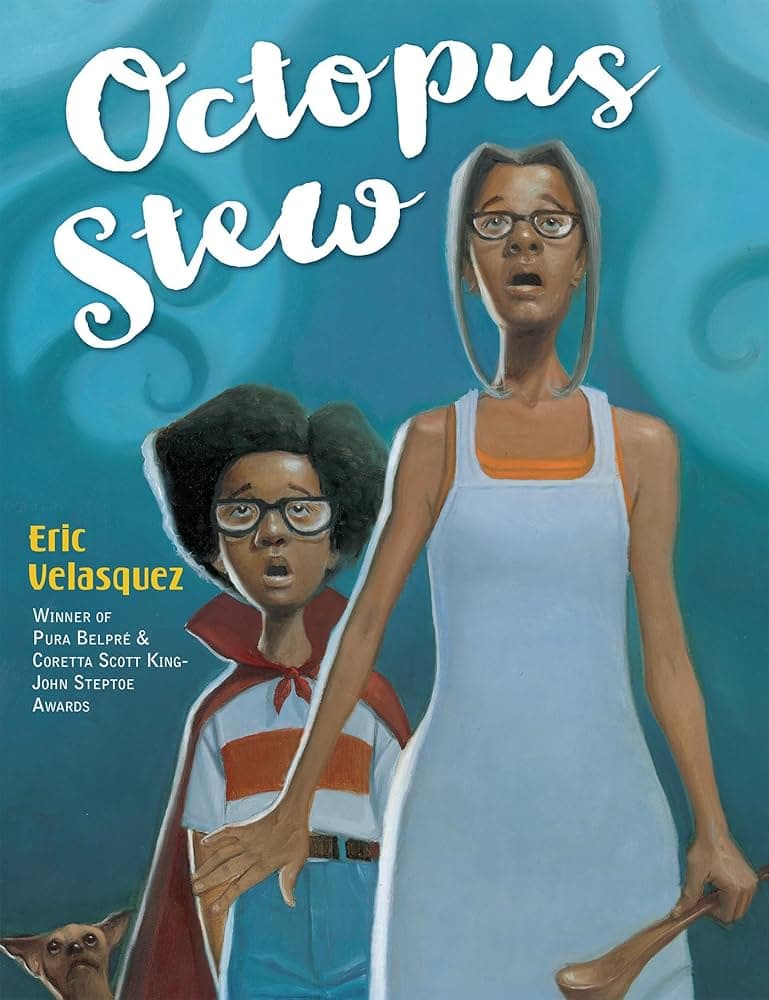
Octopus Stew is a lively story about a young boy spending time with his grandmother, who plans to make octopus stew for dinner. As they cook together, the boy learns about family traditions, trying new foods, and the love that can be shared through cooking.
Reading Tips for Story Explorers
Find a comfortable space to read together
Slow down and enjoy the illustrations
Ask and answer questions together
Make reading part of your routine - bedtime is a great time for reading
Use these prompts to encourage deeper thinking with your children:
"Tell me more, why do you think that?"
"How do you know that?"
"Interesting, did you notice anything else?"
Phonemic Awareness
When introducing the book, share the title and notice these phonemic elements:
When introducing the book, share the title and notice these phonemic elements:
The word “Octopus” in the title begins with the letter Oo. This letter says /o/, like octogon and odd. Point to the letter and say the sound together: /o/, /o/, /o/. Brainstorm other words that begin with the sound /o/ with your child (otter, ox, olive).
Ask the children to say the word after you. Show them the cover of the book and have them read the word out loud with you as you point under each word.
Vocabulary
octopus: A sea animal with eight arms called tentacles
stew: A dish made by slowly cooking ingredients together in a pot
ingredient: One of the foods used to make a recipe
tradition: Something a family or group does regularly and passes down over time
tentacle: One of the long arms of an octopus
delicious: Very tasty and enjoyable to eat
Questions to Discuss
How did the boy feel about octopus stew at the beginning of the story?
Why do you think Grandma wanted to share this meal with him?
What family traditions are important in your family?
Have you ever tried a food that seemed unusual at first? What happened?
How does cooking together help families connect?
Let's Play
Invite children and families to talk about a favorite family meal or recipe. Together, they can draw a picture of the meal and answer questions such as:
- Who usually makes it?
- When do you eat it?
- Why is it special to your family?
This activity helps children connect the story's themes of food, family, and tradition to their own experiences.