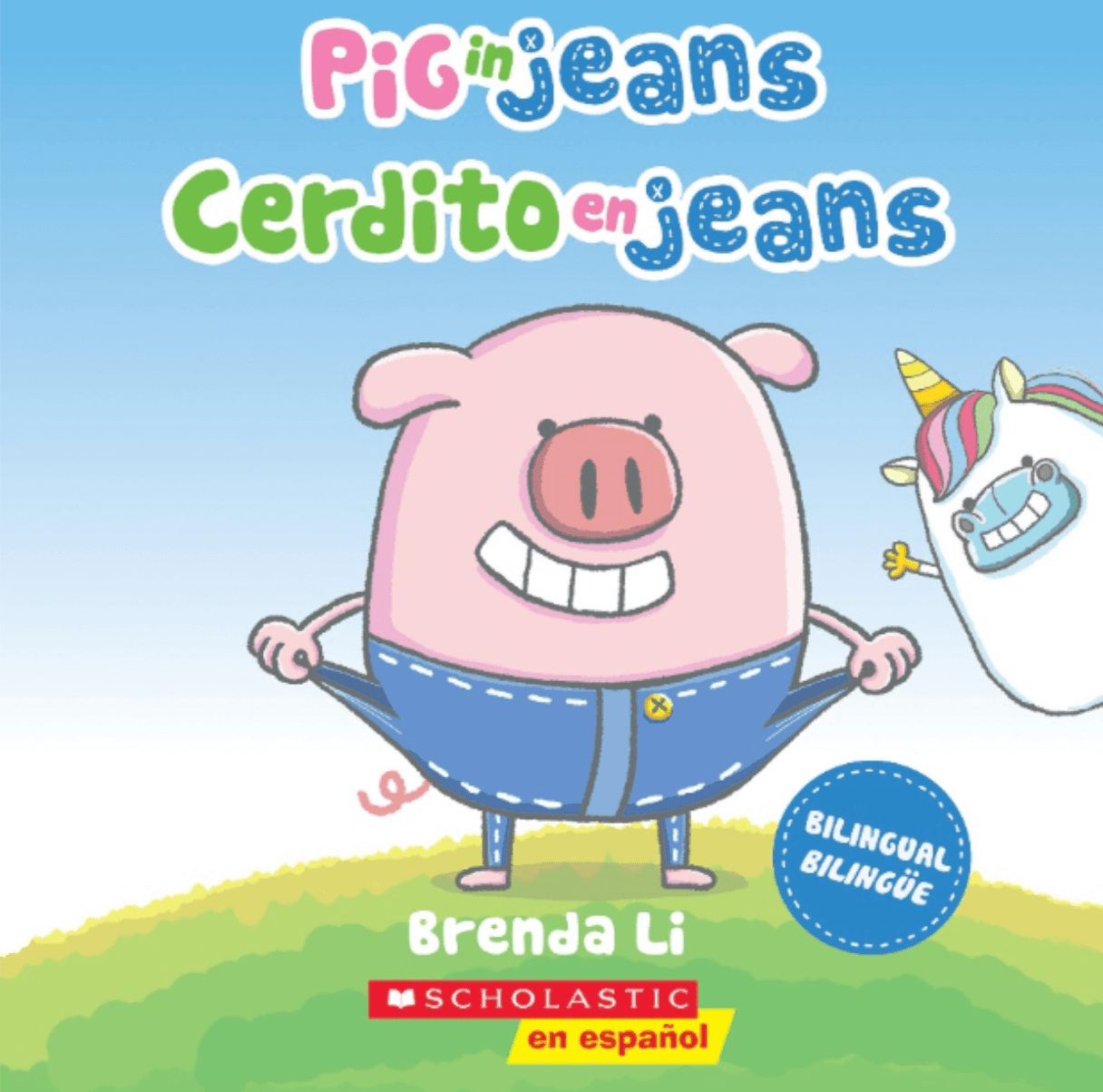
Pig in Jeans / Cerdito en jeans
by Brenda Li
A fun, simple story about a stylish pig learning about clothing, personality, and playful self-expression.
Reading Tips for Story Explorers
Find a comfortable space to read together
Slow down and enjoy the illustrations
Ask and answer questions together
Make reading part of your routine - bedtime is a great time for reading
Use these prompts to encourage deeper thinking with your children:
"Tell me more, why do you think that?"
"How do you know that?"
"Interesting, did you notice anything else?"
Phonemic Awareness
When introducing the book, share the title and notice these phonemic elements:
When introducing the book, share the title and notice these phonemic elements:
The word “Jeans” in the title begins with the letter Jj. This letter says /j/, like jump and jelly. Point to the letter and say the sound together: /j/, /j/, /j/. Brainstorm other words that begin with the sound /j/ with your child (jam, jiggle, jacket).
Ask the children to say the word after you. Show them the cover of the book and have them read the word out loud with you as you point under each word.
Vocabulary
jeans: pants made from a heavy, often blue, cotton cloth
stripes: a long, narrow band or strip set apart from the area or surface around it by a different color or material
button: a small round flat disk that fastens clothing by fitting through a slit or loop
pocket: a small piece of material, open at the top and sewn onto clothing
silly: not serious or making logical sense
Questions to Discuss
What clothes do you like to wear?
Why do you think the pig wore jeans?
What was the silliest part of the story?
How did the pig feel in the story?
What would you wear if you were a storybook pig?
What colors or patterns did you notice?
Let's Play
Families and children take turns pretending to model silly outfits like the pig. Encourage children to describe what they are “wearing” using fun vocabulary and movement:
- “I’m wearing bouncy boots!”
- “I have sparkly socks!”
- “My jeans are too wiggly!”
Families can narrate actions and encourage children to stomp, twirl, march, or wiggle while practicing descriptive language and imaginative play.